- longtong@snacks-china.com
- Mon - Sat at 7:00AM to 9:00PM

Leave Your Message
Picking the right Disney Marshmallow supplier isn't just about comparing prices and pretty product photos. If you're buying globally, you've got to look at licensing status, ingredient quality, what the factory can actually handle, packaging accuracy, and whether they've got real export experience. Sure, the Walt Disney Company name might come up in conversations, but you should verify every trademark and distribution claim directly. A supplier's website alone? That's not proof.
This guide looks at possible Disney Marshmallow partners through practical buying standards. We're talking food safety systems, allergen controls, batch traceability, shelf life, and temperature protection during international shipping. Certifications like HACCP, ISO 22000, and BRCGS can definitely help build credibility. But they don't replace an independent audit or a product sample. Small details matter too. Check the marshmallow texture after transport. Inspect the printed packaging under strong light. And confirm whether colors, flavors, and gelatin sources actually fit your target market.
Possible industry contacts might include confectionery manufacturers, private-label specialists, and packaging companies that work with global brands. Still, not every experienced candy producer is authorized to make Disney Marshmallow products. That distinction is a big one. Buyers should ask for business licenses, test reports, manufacturing addresses, minimum order quantities, and clear Incoterms. If a supplier dodges written answers, that's a risk you don't need.
No supplier looks perfect on paper. A low price can hide weak documentation, while a famous manufacturer may demand large volumes. This overview is meant to help importers compare evidence, not promises. Requirements also change by destination, and my take might miss local retail preferences. So before you sign a purchase agreement, careful verification is still essential.
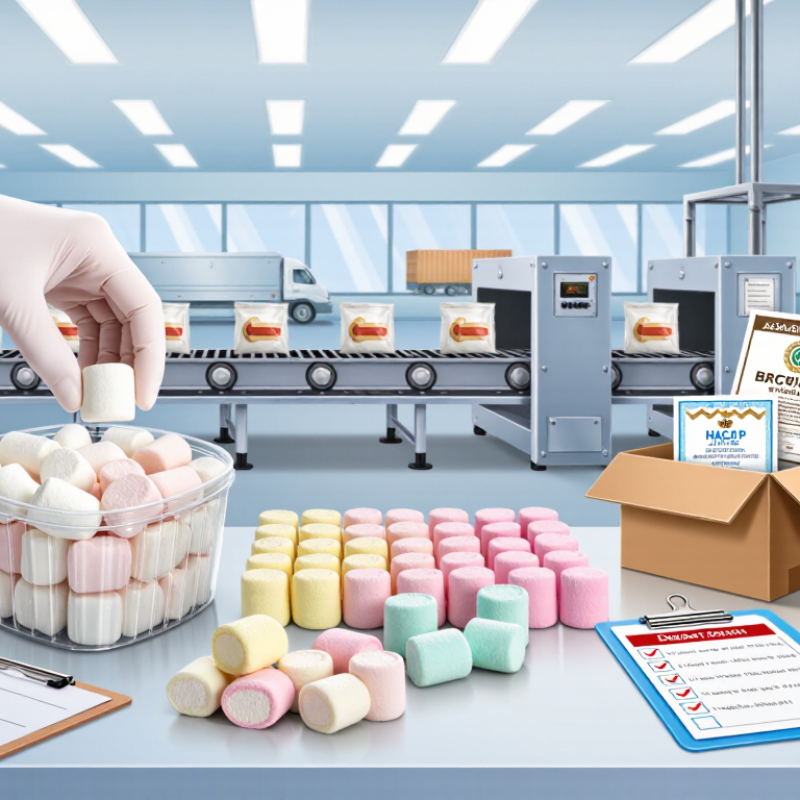
The global Cartoon Marshmallow supplier market is expanding with private-label demand, seasonal gifting, and themed retail launches. Buyers should assess production capacity, ingredient control, packaging flexibility, and export experience. According to Statista Market Insights, global confectionery revenue is projected to exceed US$250 billion in 2025, creating space for specialized soft-candy products.
Supplier evaluation must go beyond attractive samples. Request batch records, allergen declarations, shelf-life testing, and certificates from recognized food-safety systems. ISO 22000 or FSSC 22000 certification can support stronger process control. Check whether the factory can maintain consistent shapes, colors, moisture, and texture across large orders. A sample may look perfect.
It may not scale.
Grand View Research identifies product innovation and premium packaging as important confectionery market trends. For global buyers, this means suppliers should offer individually wrapped pieces, multilingual labels, carton protection, and pallet designs suited to humid routes. Confirm minimum order quantities, lead times, port handling, and temperature requirements in writing. Packaging waste also deserves attention; recyclable materials may improve retailer acceptance, but claims require evidence. Buyers should compare at least three factories, inspect recent production records, and leave room for corrective action when the first shipment reveals unexpected texture changes.
| Supplier Market Segment | Typical Buyer Profile | Typical MOQ | Typical Production Lead Time | Common Product Formats | Typical Shelf Life | Common Compliance Documentation | Best Use Case for Global Buyers |
|---|---|---|---|---|---|---|---|
| Large-scale confectionery manufacturers | National retailers, food-service distributors, and high-volume importers | Usually 1–5 metric tons per SKU or production run | 30–60 days after artwork and specifications are approved | Standard vanilla, fruit, chocolate, mini, and filled marshmallows | Approximately 6–12 months, subject to recipe and packaging | HACCP or GFSI-recognized certification, certificate of analysis, allergen statement, ingredient declaration, and microbiological results | Stable annual programs and large retail launches |
| Private-label and contract-packaging suppliers | Supermarket groups, distributors, importers, and e-commerce sellers | Typically 500–2,000 kg per SKU; packaging minimums may apply | 25–50 days after final packaging approval | Retail bags, stand-up pouches, resealable packs, and mixed-color formats | Commonly 6–12 months | Food-safety audit report, product specification, nutrition panel, allergen control plan, and packaging migration declaration where applicable | Retailers requiring customized packaging without building their own production line |
| Mid-sized export-oriented suppliers | Regional distributors and first-time importers | Usually 200–1,000 kg per SKU | 20–45 days for established formulas | Bulk cartons, food-service packs, and conventional pillow bags | Approximately 6–9 months for standard products | Commercial invoice, packing list, certificate of origin, certificate of analysis, and country-specific labeling files | Test orders, regional launches, and multi-country distributor networks |
| Specialty and clean-label producers | Natural-food retailers, premium distributors, and specialty importers | Often 100–500 kg per SKU | 30–60 days because of ingredient and process validation | Gelatin-free, plant-based, reduced-sugar, organic, and natural-color variants | Usually 4–9 months, depending on formulation | Ingredient origin statements, allergen controls, organic or vegan evidence where claimed, and laboratory test reports | Premium channels and markets with demand for dietary or ethical claims |
| Custom-shape and seasonal suppliers | Promotional distributors, seasonal retailers, and event suppliers | Typically 500–2,000 kg per shape or seasonal design | 45–75 days, including mold and sample approval | Custom shapes, two-color pieces, printed packaging, and holiday assortments | Commonly 4–9 months | Approved artwork, food-contact packaging declaration, product specification, and batch certificate of analysis | Limited-edition campaigns where visual differentiation is more important than the lowest unit cost |
| Food-service and industrial bulk suppliers | Bakeries, cafés, hotels, dessert manufacturers, and catering distributors | Usually 500 kg–5 metric tons per order | 15–40 days for regular stock items | Bulk cartons, mini pieces, topping formats, and ingredient-grade products | Approximately 6–12 months | Product specification, allergen statement, certificate of analysis, lot traceability, and transport documentation | Commercial kitchens and manufacturers that prioritize consistency and pack-size efficiency |
Review production capacity, ingredient controls, packaging options, export experience, and recent batch records. Do not trust attractive samples alone. A factory may produce excellent samples but inconsistent large orders.
Request allergen declarations, shelf-life tests, batch records, inspection reports, and food-safety certificates. Check whether documents match the actual production site. Paperwork can be incomplete.
Compare samples from different batches for shape, color, moisture, softness, and flavor. Inspect production records from recent orders. One perfect sample proves little.
Use moisture-resistant materials, secure seals, protective cartons, and suitable pallet designs. Individually wrapped pieces can reduce contact and flavor transfer. Humidity is a serious risk.
Many suppliers can customize shapes, flavors, inclusions, case packs, and display cartons. Request editable dielines, color proofs, barcode positions, and pilot packaging. Artwork mistakes are costly.
Check ingredient lists, allergen statements, nutrition panels, lot codes, origin details, and language requirements. Review labels before printing begins. Do not assume one market’s rules apply everywhere.
Request material specifications, recycling guidance, and migration-test documents for proposed packaging. Test sealing, moisture resistance, and carton strength. A greener pack may perform poorly.
Confirm minimum order quantities, lead times, port handling, temperature needs, and carton protection. Consider humid routes and long storage periods. Small pilot orders reduce risk.
This guide offers a practical overview of the Disney Marshmallow supplier market for global buyers seeking dependable sourcing options. It explains how to compare product types, texture, flavor, appearance, shelf life, and quality standards while assessing manufacturers for certifications, production capacity, traceability, and consistent quality. Buyers will also learn how to review ingredient declarations, allergen controls, hygiene systems, testing procedures, and food safety documentation before placing an order.
The guide further explores custom packaging, compliant branding, private label development, and the information suppliers need to create suitable retail or promotional formats. It also outlines key commercial considerations, including minimum order quantities, pricing structures, sample approval, production timelines, shipping methods, import documentation, and destination-market requirements. By reviewing these factors systematically, global buyers can reduce sourcing risks, improve communication with manufacturers, and select a Disney Marshmallow supplier capable of supporting quality, compliance, customization, and reliable international delivery.