When you're on the hunt for reliable Disney Chocolate suppliers, it’s honestly about more than just pretty packaging or the prices they quote. Sure, those colorful molds and character-shaped treats might catch your eye, but if you’re serious about quality, you gotta dig a little deeper. Things like product quality, licensing, manufacturing capacity, traceability, and experience with export – those are the real deal-breakers. Sometimes, a supplier can show off eye-catching chocolates and fancy gift boxes, but that doesn’t always mean they have a solid handle on stable production. Small details matter more than you think — does the chocolate arrive tempered just right? Are the boxes dry, sealed tight, and clearly labeled? And can they handle the big challenges of shipping across oceans without a hitch?
Clay Gordon, who’s a pretty well-known chocolate educator and the author of Discovering Chocolate, once said, “Chocolate is a food, not a flavor.” It might sound simple, but it’s actually a really smart point when you’re making sourcing decisions. You should check where the cocoa comes from, how much cocoa butter is in the mix, whether the flavor is balanced, and if they manage allergens properly. Also, don’t forget to verify if the supplier has the right Disney licensing or if they’re working with an authorized partner—having brand permission is non-negotiable.
Finding a trustworthy supplier takes patience and some good old-fashioned research. Ask for factory photos, audit reports, product samples, and recent shipment references. Take your time to compare these carefully. Sometimes, a supplier might communicate really well and seem legit, but their actual evidence? Not so much. Conversely, some less polished-looking companies might run fantastic factories. It’s a detail worth paying attention to.
In this guide, we’ll walk you through some of the top Disney Chocolate suppliers for 2026, especially if you’re shopping global. We’ll cover things like quality control, customization options, packaging choices, minimum order sizes, production flexibility, and how they handle international shipping. Of course, no list can eliminate every risk—markets change, shipping conditions shift, and even the best supplier can hit a rough patch during busy seasons. So, think of this as a solid starting point rather than the final word, and always do your own due diligence before making a decision.

Global buyers should define the supplier scope before requesting prices for Disney Candy. Licensed products use approved artwork, packaging, and documented permissions. Disney-themed confections only use general ideas, such as castles, stars, or colorful character-like shapes. These categories require different checks, budgets, and production timelines.
Experienced sourcing teams request business licenses, factory addresses, ingredient specifications, and recent product samples. Ask for proof of authorization when a supplier claims to offer licensed goods. Inspect packaging details carefully. Missing copyright notices or unclear importer information can create serious delays. Food facilities should also provide allergen controls, batch records, shelf-life data, and certificates required by the destination market. A supplier may look professional online but still lack export experience. That gap matters.
Tips: Compare three suppliers using the same specification sheet. Check chocolate texture after storage, not only at delivery. Photograph cartons, labels, seals, and lot codes during inspection. Confirm whether prices include molds, packaging changes, testing, and shipping documents. Avoid vague promises. A written approval process protects both sides, although it may slow the first order. Suppliers should also explain temperature-control methods for warm routes, because melted candy can turn a clean launch into costly rework.
Global buyers planning 2026 confectionery programs should treat cocoa availability as a pricing and supply risk, not a routine purchasing detail. ICCO reported a 478,000-tonne cocoa deficit for the 2023/24 season. That shortage may tighten couverture, fillings, and cocoa-based gummy ingredients. The impact can reach products marketed around the keyword Disney Gummy, where stable color, flavor, and texture matter. A supplier may quote today, yet raw-material exposure can change before production. That uncomfortable gap deserves attention.
Experienced procurement teams should request origin details, cocoa percentage, production capacity, and recent quality records. Ask how suppliers manage delayed shipments, inconsistent beans, and sudden price movements. Batch samples should be tested for taste, texture, moisture, and melting behavior before approving large orders. Audits help, but paperwork is not proof of perfect performance. I have seen attractive quotations hide weak communication and limited backup capacity. That risk is easy to underestimate.
Tips: Compare at least three qualified suppliers. Separate cocoa costs from manufacturing fees. Use smaller trial orders before annual commitments. Confirm lead times in writing. Review price-adjustment clauses carefully. Keep a realistic buffer for seasonal demand, because a spreadsheet can look precise while the physical market remains uncertain.
Global buyers need a practical benchmark when assessing chocolate suppliers for large seasonal programs. A reported annual volume of 2.1 million tonnes offers a useful scale reference. It does not prove every supplier can match that output. It shows what industrial capacity can look like across sourcing, processing, and distribution. Buyers should compare annual volume with site capacity, bean origin, product format, and delivery history. Ask for audited production figures, not impressive estimates.
A reliable supplier should explain how it handles peak orders, recipe changes, and quality checks. Request batch records, allergen controls, testing frequency, and recall procedures. These details reveal operational maturity better than a polished sales deck. For international purchasing, confirm food-safety certifications, export documents, packaging specifications, and shelf-life data.
A 2.1-million-tonne benchmark may expose a weakness in my own evaluation: volume alone can distract from consistency. Large numbers impress. Yet one delayed shipment can disrupt a full retail launch.
Tips:
Build a scorecard covering capacity, quality, traceability, lead time, and communication. Run a small pilot order before signing a yearly contract. Compare delivered samples under warm, humid, and transit conditions. Keep two qualified sources when demand is seasonal. Document every assumption.
For global buyers sourcing Disney Marshmallow, audit readiness must extend beyond attractive packaging. The World Health Organization estimates that contaminated food causes 600 million illnesses and 420,000 deaths annually. That figure makes supplier verification a commercial duty, not a paperwork exercise.
A credible factory should hold certification under a GFSI-recognized scheme. Its HACCP plan must identify risks at cooking, cooling, filling, and metal detection points. ISO 22000 should connect those controls with documented objectives, traceability, and corrective actions. FDA 21 CFR Part 117 also requires preventive controls, supplier approval, sanitation records, and hazard-based verification. For U.S. shipments, labels should match FDA 21 CFR Part 101, especially allergen declarations and ingredient order. Small gaps matter. A missing cooling log can weaken an otherwise strong audit.
Tips: Request the latest certificate, audit report, and corrective-action evidence. Check certificate scope, site address, expiry date, and product category. Conduct a mock recall using one production lot. Can the supplier identify raw materials within four hours? Many teams assume yes. They should test it. Compare laboratory results with internal specifications, including moisture, microbiological limits, and foreign-material checks. Keep buyer requirements aligned with GFSI, HACCP, ISO 22000, and FDA records. Independent review remains valuable because supplier documents can be complete, yet operational habits may still drift.
Global chocolate buyers need more than flavor samples and a polished supplier profile. They need cocoa-origin evidence that survives a document review. The 2022 Cocoa Barometer reports that Côte d’Ivoire and Ghana produce over 60% of global cocoa. This concentration increases traceability pressure. A capable supplier should link each cocoa lot to farm-level geolocation records, not only to a national origin.
EUDR readiness begins with usable coordinates. Suppliers should provide farm polygons or accurate location points, harvest dates, producer-group records, and shipment lot numbers. Buyers can compare these records with satellite-based deforestation checks. The European Commission’s EUDR framework requires operators to demonstrate that cocoa is not connected to recent deforestation. Paper certificates alone are weak evidence. During audits, I would request a sample lot and trace it backward, from warehouse pallet to collection point, then to mapped farms. The process often reveals gaps.
For Chocolate Jam buyers, origin records should also show segregation controls, processing sites, and transfer dates. The ICCO’s 2023/24 report estimated global cocoa production near 4.8 million tonnes, showing the scale of records involved. Large volumes create practical risks: mixed bags, outdated coordinates, and translated names can break data continuity. One weakness remains. Some suppliers present geolocation files without explaining collection methods or accuracy. Buyers should ask who captured the coordinates, when, and how errors were corrected. A transparent supplier admits uncertainty and documents the repair. That is more credible than perfect-looking paperwork.
For 2026 chocolate sourcing, MOQ, lead time, and landed cost matter more than factory price. A practical RFQ benchmark is 500–2,000 units for regional stock products and 5,000–20,000 units for custom packaging. However, suppliers often quote different carton sizes, making comparisons unreliable. Ask for a unit price, pallet count, production window, and temperature-control requirement.
Regional performance varies. European suppliers may offer 14–30-day production and shorter intra-regional delivery. North American suppliers often quote 14–35 days, depending on packaging and seasonal capacity. Asian suppliers can provide competitive labor costs, but total transit may reach 30–60 days. The World Bank’s 2023 Logistics Performance Index shows noticeable gaps in customs efficiency and shipment reliability across markets. That gap can quietly erase a low factory quote.
Landed cost should include product, packaging, inland transport, freight, insurance, duties, testing, and cold-chain handling. The World Bank’s Commodity Markets Outlook recorded cocoa prices rising sharply during 2024, while the International Cocoa Organization reported a 2023/24 production deficit of about 478,000 tonnes. Price buffers are necessary.
For example, a 0.80-dollar unit can become 1.12 dollars after freight, duty, and inspection.
Our spreadsheets are useful, but not perfect. Weather delays, port congestion, and rejected artwork still happen. Request recent shipment evidence, temperature records, allergen documentation, and two comparable landed-cost scenarios before selecting a regional supplier.
Global buyers should verify authorization before comparing chocolate prices or minimum order quantities. A familiar character on a chocolate box does not prove legal approval. Request a current license certificate, the authorized company name, and the covered product categories. Confirm that the supplier, factory, and exporter match the documents. Small differences can signal a serious gap.
Packaging rights require separate attention. Ask who approved the artwork, printing method, colors, images, and carton dimensions. A supplier may have permission to sell chocolate but not permission to print protected characters on retail packaging.
Request approval records for each SKU, including the package language and sales channel. Keep dated copies. Digital screenshots are not always reliable evidence.
Licensing can change by country. A product approved for one market may not be cleared for another. Check territory, contract dates, import labels, recycling marks, allergen statements, and permitted retail platforms. A strong supplier should explain these limits clearly, not promise worldwide rights without proof. Independent document checks and sample inspections add useful protection. Still, the process is not perfect. I once underestimated how quickly packaging approval could expire during a product update. That oversight delayed printing and created avoidable costs. Build a review checkpoint before every reorder, especially when artwork, factory location, or destination country changes.
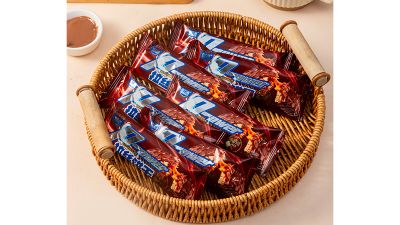
Our chocolate-coated milk biscuits are carefully crafted in a professional factory in China, combining a smooth milk-flavored center with a rich, satisfying chocolate coating. Each biscuit weighs 28 grams and is individually wrapped to help preserve its freshness, crisp texture, and delicious taste. The chocolate layer adds extra flavor while creating a protective barrier that supports a longer shelf life, making the biscuits suitable for retail shelves, snack selections, and everyday enjoyment.
Packed with convenience in mind, each box contains 20 individually packaged biscuits, while 12 boxes are arranged in one carton for efficient storage and transportation. As experienced suppliers, we also provide customizable packaging options, including designs that display your logo, product details, and other business information. This flexibility allows distributors and retailers to create packaging that fits their market preferences while offering consumers a tempting chocolate and milk biscuit treat.
: Define whether products are officially licensed or only inspired by general themes. Licensed goods require documented approval, packaging permissions, and approved artwork. Themed products may use castles, stars, or colorful shapes without protected characters. The distinction changes costs, checks, and production time.
Request the business license, factory address, ingredient list, and recent samples. For licensed goods, ask for written authorization. Food facilities should provide allergen controls, batch records, shelf-life data, and destination-market certificates. Online professionalism proves little. That gap matters.
Give three suppliers the same specification sheet. Compare ingredients, product weight, packaging, lead time, testing, and shipping documents. Ask whether molds and packaging changes are included. Vague promises create expensive surprises.
Inspect chocolate after storage, not only upon delivery. Test samples in warm, humid, and simulated transit conditions. Photograph cartons, seals, labels, and lot codes during inspection. Texture can change later.
No. Reported annual volume offers a scale reference, not proof of dependable performance. Compare site capacity, product format, delivery history, and audited production figures. A large number may distract from consistency. One delayed shipment can disrupt a seasonal launch.
Ask how the factory handles seasonal demand, recipe changes, quality checks, and recalls. Request batch records and testing frequency. Run a small pilot order before signing a yearly contract. My evaluation may overvalue volume.
Suppliers should link cocoa lots to farm locations, harvest dates, producer groups, and shipment numbers. Farm polygons or accurate coordinates are more useful than national-origin claims. Trace one lot backward from pallet to collection point and mapped farms. Paper alone is weak.
Request usable geolocation records and compare them with satellite-based land checks. Ask who collected the coordinates, when, and how errors were corrected. Outdated coordinates, mixed bags, and translated names can break data continuity. Transparent uncertainty is better than perfect-looking paperwork.
Choosing the best Disney Chocolate supplier in 2026 requires more than comparing product catalogs. Global buyers should first clarify whether they need officially licensed products or Disney-themed confections without protected characters, artwork, or packaging. Supplier evaluation should then consider cocoa-market risk, production capacity, and the ability to maintain stable supply during price or harvest volatility. Key compliance checks include recognized food-safety systems, HACCP-based controls, ISO 22000 certification, and applicable food-contact and labeling requirements.
Buyers should also assess cocoa traceability through origin records, farm or plot geolocation, and documented due diligence. A practical comparison should cover minimum order quantities, production and shipping lead times, regional logistics, duties, and total landed cost. Before signing any agreement, confirm authorization status, packaging rights, territory limits, and country-specific licensing requirements. The strongest supplier combines reliable capacity, transparent sourcing, verified food safety, flexible commercial terms, and clear documentation for every market served.