Leave Your Message
0%

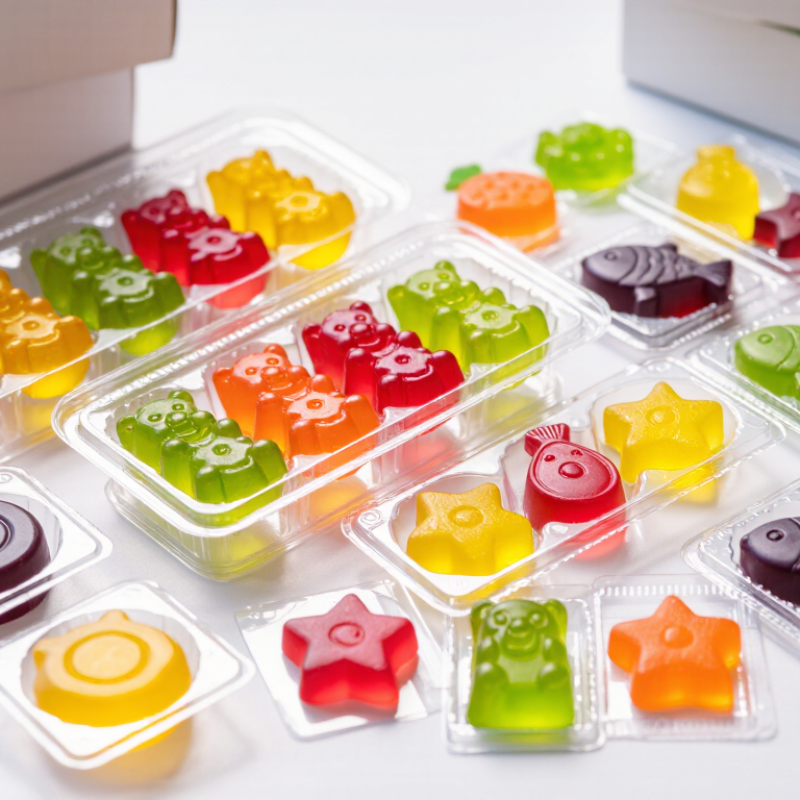
These days, everyone’s crazy about fun, playful candies, and that’s opening up some pretty exciting opportunities for Cartoon Jelly wholesalers. I was reading recently that the global gummy market hit about USD 19.6 billion in 2023 — wow, right? And it’s actually expected to keep growing strong through 2030, thanks to cool new formats, easier-to-handle packaging, and younger folks just loving these fun treats. All of this makes cartoon-shaped jellies super popular among supermarkets, candy sellers, online shops, and even seasonal gift shops.

That being said, sourcing from around the world isn’t just about finding the lowest factory prices. According to Euromonitor International’s 2024 consumer research, more and more buyers are paying attention to ingredients, sugar levels, packaging claims, and safety measures. So, it’s a good idea to ask for complete details — think ingredient lists, allergen info, nutrition facts, shelf-life info, and packaging sizes. To get a better picture of where your products are coming from and what’s in demand, the International Trade Centre’s Trade Map can be pretty handy for comparing import trends, supplier countries, and target markets before you start reaching out to manufacturers.

And a little tip—pay attention to those small details. Something that looks perfect in a sample tray might leak or get damaged in a long ocean shipment. Things like carton strength, sealing temperature, humidity protection, and storage conditions really matter, so practical testing is worth doing. Also, don’t just rely on certifications like ISO 22000 or HACCP — it’s helpful, but these don’t automatically guarantee consistent quality. Doing supplier audits, sampling batches, reviewing lab reports, and even third-party inspections can really help cut down on avoidable issues.

Let’s be real: there’s no such thing as a perfect supplier. Even a seemingly complete spreadsheet can cause delays if, for example, it’s missing allergen info and that stops your shipment at customs. And don’t forget to double-check local labeling rules and packaging requirements with experts who know the ins and outs—you don’t want surprises down the line. Careful sourcing means combining market data, factory experience, clear communication, and continuous quality checks. When you do that, buying cartoon jelly becomes not just more reliable but also easier to scale and all-around more responsible in terms of international trade.
How to Source Cartoon Jelly Wholesale Globally?

Classify Cartoon Jelly Under HS 1704.90 Using ITC Trade Data

Sourcing Cartoon Candy globally starts with a defensible customs classification. Many jelly-style sweets can be reviewed under HS 1704.90, the category for other sugar confectionery. However, jelly texture alone does not guarantee this code. Ingredients, filling, packaging, and national tariff rules may change the result. Check the latest national tariff schedule before requesting quotations.

ITC Trade Data can help compare exporting countries under HS 1704.90. Review export value, quantity, growth, and reported partner markets across several years. A sudden price difference deserves attention. It may reflect product quality, packaging weight, freight terms, or incomplete reporting. Keep a small spreadsheet with the reporter, partner, year, value, quantity, and unit value. This makes supplier comparisons less vague.

A practical search should match data with physical product details. Request an ingredient list, net weight, carton dimensions, shelf life, and sample photos. Then ask a customs professional to confirm the proposed code. ITC figures are useful, but they are not a substitute for a binding customs decision. Mirror statistics can also expose gaps between exporter and importer reports. That part is easy to overlook.

Start small. Test one shipment.

My first classification review might still miss a national exception. That is why reliable sourcing needs document checks, sample inspection, and updated trade data before payment terms are finalized.

Size Target Markets with 2023 UN Comtrade Import Values

How to Source Cartoon Jelly Wholesale Globally?

Size Target Markets with 2023 UN Comtrade Import Values

Global sourcing should begin with evidence, not colorful packaging. UN Comtrade 2023 data for HS 170490, a proxy for sugar confectionery excluding chocolate, shows strong import demand. The United States recorded approximately US$1.8 billion in imports, while Germany reached about US$1.1 billion. The United Kingdom, France, and Canada also reported large flows, near US$1.0 billion, US$900 million, and US$600 million respectively. These figures do not isolate jelly products. That limitation matters.

Use the numbers to rank markets, then validate local product fit. ITC Trade Map can help compare supplier shares, unit values, and annual growth. Innova Market Insights also identifies playful shapes, portion control, and novelty textures as continuing confectionery trends. A cartoon jelly buyer should test a small shipment first. Check texture after heat exposure, seal strength, color stability, and carton compression. A bright Cartoon Biscuit shape may attract children, but retailers still require consistent weight and clean labeling.

Germany may suit suppliers seeking disciplined quality control and central European distribution. The United States offers scale, but competition and compliance checks can be demanding. Canada may provide a smaller trial market with clear regional logistics. Freight rates, customs classification, and seasonal demand can change the ranking quickly. I would avoid treating import value as guaranteed sales. It is only a starting signal. Product reviews, distributor interviews, and repeat-order data should challenge the spreadsheet.

Set Sugar and Gelatin Specs Against USDA and Codex Benchmarks

How to Source Cartoon Jelly Wholesale Globally?

Sugar and gelatin specifications should be written before comparing wholesale suppliers. For jelly candy, a practical sugar target is often 65–68° Brix. This supports a firm texture and limits water activity. However, this range is not a universal legal requirement. Confirm it against the product category and destination rules. Check moisture, ash, reducing sugars, and particle size. A bright sample can still hide unstable syrup.

Gelatin needs equally clear controls. Specify bloom strength, viscosity, moisture, ash, protein content, and microbiological limits. A common commercial range may be 180–250 Bloom, but processing conditions can change the final bite. Record the test temperature and method. Do not accept “food grade” as a complete specification. Source declarations and allergen statements should match every shipment.

Use Codex food hygiene, additive, and labeling references as an international starting point. Apply relevant USDA food safety and labeling guidance when goods enter the United States. These references help assess sanitation, ingredient identity, records, and traceability. They do not replace destination-country law. Request a recent certificate of analysis, production lot, laboratory method, and retention sample. Then test the candy independently for Brix, texture, color migration, and microbial safety. My first specification may still be too broad. Seasonal humidity, storage temperature, and gelatin aging can expose weaknesses later. That is why pilot cartons should face real warehouse conditions before a large purchase.

Shortlist Plants with GFSI Schemes Used Across 100+ Countries

Global sourcing for Cartoon Lollipop jelly starts with the factory, not the product photograph. Shortlist plants holding a current certification under a GFSI-recognized scheme. GFSI states that its benchmarked approach supports food supply chains across more than 100 countries. This helps importers compare audit expectations across regions, although recognition alone cannot guarantee consistent quality.

Ask for the certificate scope, issuing body, site address, and latest audit status. Confirm that jelly confectionery is covered, not merely dry ingredients or packaging. The World Health Organization estimates that contaminated food causes 600 million illnesses and 420,000 deaths annually. The risk feels distant until a sealed pouch fails a microbiological test. Request allergen controls, sanitation records, foreign-material checks, and a traceability exercise completed within four hours.

A practical factory review should include a production-floor video or live audit. Look for clean filling lines, covered cooling tunnels, calibrated thermometers, and labeled ingredient bins. World Bank research estimates that unsafe food costs low- and middle-income economies about 110 billion dollars yearly. Price still matters. It should not replace verification. I would also sample three recent batches before signing a wholesale agreement. A perfect audit file can hide weak daily habits. Recheck the certificate before each shipment, especially after seasonal production changes. WHO and World Bank reports provide useful risk context, but factory-specific evidence remains decisive.

Check Labels Against FDA’s 9 Allergens and the EU’s 14

How to Source Cartoon Jelly Wholesale Globally?

A colorful cartoon jelly may look simple, but its allergen label requires careful checking. Compare every ingredient and processing aid with the FDA’s nine major allergens: milk, eggs, fish, crustacean shellfish, tree nuts, peanuts, wheat, soybeans, and sesame. Sesame matters, even in small flavoring or topping components. Ask suppliers for a current ingredient specification, allergen declaration, and production-site details. Do not rely only on product photographs.

For European distribution, check the EU’s 14 allergens as well. They include cereals containing gluten, crustaceans, eggs, fish, peanuts, soybeans, milk, nuts, celery, mustard, sesame, sulphites, lupin, and molluscs. Sulphites generally require declaration above 10 mg/kg or 10 mg/L. Verify the exact formula and destination rules with a qualified compliance professional. Requirements can change.

Look closely at cross-contact controls. A jelly line may handle milk powder, nut flavorings, or wheat-based ingredients on nearby equipment. “May contain” wording should reflect a documented risk assessment, not guesswork. Request batch records and test results when the risk is significant. Check translated labels, too. A single missing allergen term can delay customs clearance or endanger consumers. Packaging artwork also needs review; tiny text is a practical weakness. I would recheck it before every major shipment. Mistakes happen. Suppliers should explain them clearly and correct the source documents, not merely replace the label.

How to Source Cartoon Jelly Wholesale Globally?

Check Labels Against FDA’s 9 Allergens and the EU’s 14

The U.S. FDA recognizes 9 major food allergens, while the EU requires declaration of 14 allergen categories. Seven categories are directly aligned by name or common regulatory meaning: milk, eggs, fish, crustaceans, peanuts, soybeans, and sesame. Wheat and tree nuts require careful comparison because EU categories cover cereals containing gluten and nuts, respectively. These are regulatory list counts, not the allergen content of any specific jelly product.

Validate Samples with AQL 2.5 and Shelf-Life Test Protocols

Global sourcing cartoon jelly begins with a documented sample plan. AQL 2.5 should guide inspection, not guarantee perfect production. Under ISO 2859-1, AQL describes a sampling parameter for acceptable process quality. It does not mean every unit will be defect-free. Define critical, major, and minor defects before testing. A leaking cup is critical. A crooked label is minor.

Test retained samples at arrival and throughout storage. Record lot code, net weight, pH, water activity, seal strength, color, odor, and texture. Use accelerated testing only for screening. Real-time confirmation remains necessary. The Codex General Principles of Food Hygiene supports science-based controls across the food chain. WHO’s global food safety estimates report about 600 million foodborne illnesses and 420,000 deaths annually. Traceability is practical, not decorative.

For shelf-life validation, store samples under intended conditions and add abuse conditions, such as 30°C transport exposure. Check samples on days 0, 30, 60, and 90, or until sensory failure. Set pass limits before tasting. Monitor swelling, syrup separation, mold, off-odor, texture loss, and seal leakage. A laboratory result can pass while a child rejects the texture. That gap deserves review. I would not approve a global shipment from one attractive sample. Supplier history, seasonal heat, and warehouse humidity can change the result. My imperfect rule is simple: test more when evidence looks thin.

Plan Sea Freight Around UNCTAD’s 80% Global Trade Share

How to Source Cartoon Jelly Wholesale Globally?

Around 80% of global trade by volume moves by sea, according to widely cited UNCTAD estimates. That makes ocean planning central to cartoon jelly sourcing. Choose suppliers near reliable container ports, not only those offering the lowest factory price. Ask for batch records, ingredient lists, allergen controls, and recent product samples. A carton may look bright online, yet arrive softened after weeks in humid transit. Test texture before placing a large order.

Plan shipments around sailing schedules, port congestion, and seasonal demand. Standard dry containers may suit stable jelly products, but heat-sensitive recipes need stronger packaging or controlled conditions. Use moisture barriers, food-grade inner bags, and sturdy cartons with clear lot codes. Confirm container loading photos and seal numbers. Keep at least two weeks of stock coverage when possible. I once underestimated a holiday port delay; the extra storage cost erased the freight savings.

Tips: Compare total landed cost, not the invoice alone. Include freight, insurance, duties, inspection, storage, and local delivery. Request a small trial shipment before scaling. For search campaigns involving “Cartoon Chocalate,” verify the wording carefully; product labels and customs documents must match the actual item. Review shelf-life data against the longest realistic voyage. A cheaper route can become expensive. Suppliers should also explain recall procedures and temperature limits in writing.

How to Source Cartoon Jelly Wholesale Globally? - Plan Sea Freight Around UNCTAD’s 80% Global Trade Share
Planning Dimension Verified or Standard Data Wholesale Sourcing Application Sea-Freight Planning Action Data Reference
1. Global Shipping Context
Share of global trade moved by sea More than 80% of global merchandise trade by volume is transported by sea. Sea freight is normally the primary transport mode for non-urgent, high-volume jelly imports. Build the purchasing calendar around vessel cut-off dates, port congestion, customs clearance and inland delivery. United Nations Conference on Trade and Development (UNCTAD), Review of Maritime Transport.
Containerization suitability Food products packed in sealed retail cups or pouches can generally be shipped as dry cargo when the product specification allows it. Carton dimensions, stackability, moisture resistance and pallet configuration directly affect freight cost. Request a carton-loading plan before confirming the purchase order. General international containerized-cargo practice; final suitability depends on the product specification and carrier requirements.
Temperature requirement Ambient, chilled and frozen products require different storage and transport controls. Many shelf-stable jellies can use dry containers, while products requiring temperature control need reefer planning. Confirm the manufacturer’s storage range, maximum exposure temperature and transport conditions before booking. Product label, technical data sheet and applicable food-safety requirements.
2. Container and Loading Benchmarks
20-foot general-purpose container Approximate internal capacity: 33 m³; typical internal length is about 5.9 m. Suitable for smaller trial orders or dense cargo with relatively high weight per carton. Use the lower of the volume limit, payload limit and destination-country road-weight limit. Typical ISO container specifications; actual usable capacity varies by equipment and carrier.
40-foot high-cube container Approximate internal capacity: 76 m³; internal height is about 2.69 m. Usually more efficient for lightweight, high-volume jelly cartons. Compare the cost per cubic metre with a 20-foot container instead of comparing only the total freight charge. Typical ISO container specifications; actual dimensions vary slightly by equipment provider.
Standard pallet footprint Common international pallet footprints include approximately 1,200 × 800 mm and 1,200 × 1,000 mm. Destination-market pallet rules may affect the number of cartons loaded and the final warehouse handling cost. Confirm whether the buyer, port, warehouse or retailer requires a specific pallet size. Common EUR and ISO pallet dimensions; local market requirements may differ.
Carton loading calculation Carton volume = length × width × height. Container utilization = loaded carton volume ÷ usable container volume. For example, a carton measuring 0.40 × 0.30 × 0.25 m has a volume of 0.03 m³. Use actual packed-carton measurements, not unfilled product dimensions, when estimating container quantity. Standard logistics calculation.
3. Regional Procurement and Route Planning
East and Southeast Asia to North America Commonly planned as a full-container or consolidated sea-freight movement, depending on order size. Suitable for large-volume jelly orders when demand forecasts justify inventory in transit. Compare direct service with transshipment service; include destination drayage, customs and terminal charges. Route choice depends on origin port, destination port, sailing schedule and carrier availability.
East and Southeast Asia to Europe Sea freight is commonly used for containerized consumer food products. Useful for planned replenishment because ocean transit normally requires more lead time than air freight. Allow additional time for import documentation, food controls, port handling and inland transport. Transit time is route-specific and should be confirmed in the carrier’s current sailing schedule.
South Asia or Middle East to Africa Port-to-port routing may involve direct calls or transshipment depending on the origin and destination. Consolidation can reduce cost for smaller wholesale orders but may add handling and schedule complexity. Verify the destination port’s container-handling capability and the availability of refrigerated storage if required. Port infrastructure and service frequency vary by route and season.
Latin America regional supply Shorter regional sea routes may be practical when the product is manufactured near a suitable export port. Regional sourcing can reduce sailing distance and simplify replenishment for nearby markets. Compare total landed cost, not only the factory price or ocean freight rate. Actual route economics depend on origin, destination, trade terms and inland distance.
4. Product Compliance and Documentation
Food-contact packaging Packaging materials that contact food must comply with the rules of the importing market. Cartoon-shaped cups, lids, seals and printed packaging should be checked as food-contact components. Collect packaging specifications, declarations of compliance and migration-test documents where required. Applicable national food-contact regulations and Codex guidance.
Ingredient and allergen declaration Ingredients and allergen information must follow the destination market’s labeling rules. Flavors, colors, sweeteners, gelatin or other gelling agents may require market-specific review. Approve the final artwork only after checking the destination language, nutrition format and allergen statement. Codex General Standard for the Labelling of Prepackaged Foods and importing-country law.
Lot identification and traceability Each shipment should be linked to a production lot, manufacturing date and best-before or expiry date. Traceability supports recall control, inventory rotation and customs or retailer documentation. Match the lot number on cartons, retail units, packing lists and quality records. Food-safety management and importing-country traceability requirements.
Import documents Common documents include commercial invoice, packing list, bill of lading, certificate of origin where required and food-related certificates where applicable. Missing or inconsistent documents can delay customs release and increase storage or demurrage charges. Use one document checklist covering supplier, freight forwarder, customs broker and importer responsibilities. Destination customs authority and applicable food-import regulations.
5. Incoterms and Landed-Cost Control
EXW Buyer generally takes responsibility from the seller’s premises, subject to the agreed contract. Can provide cost visibility but may require the buyer to manage export procedures in the supplier’s country. Confirm who handles export clearance, loading, inland transport and insurance before using the term. ICC Incoterms® 2020.
FOB For sea transport, the seller delivers the goods on board the vessel nominated by the buyer at the agreed port. Often used when the buyer controls the main ocean freight booking. Define the exact named port and confirm responsibility for origin charges and documentation. ICC Incoterms® 2020.
CIF The seller arranges cost, insurance and freight to the named destination port; risk transfers when goods are on board at the port of shipment. Useful for comparing supplier quotations, but destination charges may still be payable by the buyer. Request a complete destination-charge estimate before comparing CIF offers. ICC Incoterms® 2020.
Landed-cost formula Product cost + origin charges + ocean freight + insurance + destination charges + customs duties/taxes + inland delivery + inspection and storage. Provides a more reliable comparison among regions and order quantities. Calculate cost per cup, carton and kilogram using the same assumptions for every quotation. Standard international trade-cost calculation; tax and duty treatment depends on the destination market.
6. Practical Ordering Controls
Purchase-order quantity Order quantity should be based on forecast demand, minimum order quantity, shelf life and available storage. A full container may reduce freight per unit but can increase expiry and working-capital risk. Use a smaller pilot shipment before committing to repeated full-container orders. Commercial planning principle; exact quantity depends on the buyer’s sales forecast.
Remaining shelf life at arrival Required remaining shelf life is set by the buyer, retailer or importing market; there is no universal global percentage. Long ocean transit and customs delays reduce the time available for sale. Write a minimum remaining shelf-life requirement into the purchase order and inspection plan. Buyer specification and destination-market requirements.
Quality inspection points Check packaging integrity, seal condition, net weight, appearance, flavor, labeling, carton count and lot coding. Early inspection reduces the risk of shipping nonconforming cartoon jelly products. Inspect before container loading and retain photographs, samples and signed inspection records. Buyer-approved product specification and applicable food-safety standards.
Freight booking buffer Ocean schedules can change because of weather, port congestion, equipment shortages, transshipment or operational disruptions. Time-sensitive promotions are exposed to stock-out risk when planned too close to the required delivery date. Set a booking deadline before the required ship date and maintain safety stock for critical sales periods. Operational planning recommendation; actual disruption risk varies by route and season.
Note: Container dimensions, route patterns and transit conditions are planning benchmarks rather than guaranteed service specifications. Confirm final figures with the selected freight forwarder, carrier, customs broker and destination-market authorities.

Chinese Jelly Cups Guide: Blueberry, Strawberry & Mango Flavors from Trusted Factory Suppliers

Our 60-gram jelly cups are a delicious choice for children and adults, made in China by an experienced factory supplier with a focus on consistent quality and enjoyable taste. Available in three popular flavors, each color makes selection easy: blue for refreshing blueberry, red for sweet strawberry, and yellow for tropical mango. The smooth, tender texture and rich fruit-inspired flavors make these jelly cups suitable for family snacks, parties, school events, convenience stores, and retail shelves. They taste especially delightful when served chilled.

For practical storage and attractive presentation, 30 cups are arranged in two layers to form a convenient tray. Each tray is covered with clearly printed advertising paper and sealed in a transparent plastic bag to help maintain freshness during handling and transportation. Eight trays are carefully packed into one carton, providing 240 individual jelly cups per carton. With colorful packaging, multiple flavor options, and factory-direct production, these jelly cups offer suppliers and retailers an appealing snack product that is easy to display, distribute, and enjoy.

FAQS

Can cartoon jelly be classified under HS 1704.90?

Many jelly-style sweets may fit HS 1704.90 as other sugar confectionery. Texture alone is not enough. Ingredients, fillings, packaging, and destination rules can change the classification. Confirm the latest national tariff schedule before ordering.

How can trade data help compare suppliers?

Compare export value, quantity, growth, reported markets, and unit value across several years. A sudden price gap needs investigation. It may reflect quality, freight terms, packaging weight, or incomplete reporting. Keep a spreadsheet with reporter, partner, year, value, quantity, and unit value.

What product documents should a supplier provide?

Request the ingredient list, net weight, carton dimensions, shelf life, sample photos, and production details. Match these documents with the proposed customs code. Trade statistics cannot replace a binding customs decision. I might still miss a national exception.

How should a factory be shortlisted?

Choose factories with a current certification under a recognized food-safety scheme. Check the certificate scope, issuing body, site address, and audit date. Confirm that jelly confectionery is covered. Recognition helps comparison, but it cannot prove daily consistency.

What should be checked during a factory audit?

Review the filling line, cooling area, thermometers, ingredient bins, sanitation records, and foreign-material controls. Ask for a traceability exercise completed within four hours. A clean audit file can hide weak habits. Recheck the evidence.

How many production samples should be tested?

Test samples from at least three recent batches before signing a wholesale agreement. Compare texture, color, filling, weight, packaging seals, and microbiological results. One attractive sample is insufficient. Start small. Test one shipment.

Which allergens need attention on jelly packaging?

Check the formula against the major allergens required in the destination market. Common examples include milk, eggs, fish, shellfish, nuts, peanuts, wheat, soy, and sesame. Some European markets also require celery, mustard, sulphites, lupin, and molluscs. Requirements can change.

How can cross-contact risks be controlled?

Ask whether nearby equipment handles milk powder, nut flavorings, or wheat ingredients. Review allergen cleaning records, batch documents, and relevant test results. “May contain” wording should follow documented risk assessment. Translated labels need review, too. Tiny text fails easily.

Conclusion

Sourcing Cartoon Jelly globally requires a structured process that combines market research, product compliance, quality control, and logistics planning. Begin by classifying the product under HS 1704.90 and using ITC trade data to understand comparable confectionery flows. Then evaluate target markets through 2023 UN Comtrade import values, considering demand, competition, tariffs, and distribution conditions. Product specifications should clearly define sugar, gelatin, texture, color, and packaging requirements in line with relevant USDA and Codex benchmarks.

Next, shortlist manufacturers operating under recognized GFSI-based food safety schemes used internationally. Review labels for ingredient declarations, allergen controls, and market-specific requirements, including the FDA’s nine major allergens and the EU’s fourteen allergen categories. Before placing a large order, validate samples through AQL 2.5 inspections, microbiological checks, packaging tests, and shelf-life trials. Finally, coordinate sea freight, documentation, lead times, and port capacity, recognizing that ocean shipping carries most global trade by volume.
Nathaniel

Nathaniel

Nathaniel is a dedicated marketing professional at Longtong Group, where he thrives in the fast-paced environment of OEM production. With a strong expertise in the snack industry, he plays a pivotal role in showcasing the company’s extensive product range, which includes favorite treats such as......
Previous Why Choose Bubble Blowing Candy for Your Brand?