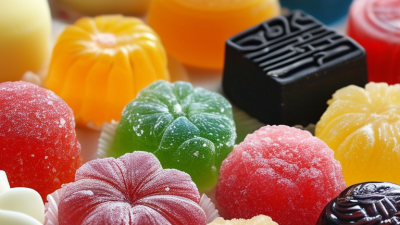
When you're sourcing Shantou Candy for global wholesale, it's not just about comparing factory prices—that's a start, but definitely not the whole story. You really need to dig into the product itself, chat with suppliers, and have a good handle on the market. Shantou's got a pretty rich tradition in sweets—think chewy candies, hard candies, gummies, and gift sets. But keep in mind, each type can be different when it comes to texture, sweetness, shelf life, and how it’s packaged.
The key to a smooth sourcing process? Clear specs from the get-go. Make sure you know exactly what ingredients, flavors, target audiences, packaging sizes, and order quantities you're working with. Always ask for samples before committing to large orders—take a good look at how they look, feel, and taste. If possible, visiting the factory can be a game changer—check out how tidy everything is, how they organize storage, and if they track batches properly. Also, don’t forget to verify safety certifications and export docs—they’re crucial for making sure everything’s above board and legal in your destination country.
Pay attention to those small but important details. For example, cartons should be sturdy enough to handle humidity during transit. Labels need to be accurate—listing ingredients, allergens, nutrition info, and expiration dates. Make sure you get clear answers on minimum order quantities, production timelines, payment terms, and shipping options. Sometimes, price quotes look really tempting at first, but watch out for hidden costs—they often pop up later. So, be thorough and review everything carefully.
No supplier is perfect, and delays can happen even with the best of plans. But staying transparent and communicating openly helps avoid unnecessary headaches. It’s a good idea to compare several qualified manufacturers and keep track of your decisions along the way. Having a solid, thoughtful sourcing plan isn’t just for today—it helps protect your product quality, your brand's reputation, and your customers’ trust in the long run. This guide’s here to help you evaluate Shantou Candy suppliers effectively, with practical standards, realistic expectations, and a focus on building lasting wholesale partnerships.
How to Source Shantou Candy for Global Wholesale?
Map Shantou Candy Suppliers Using HS 1704 Trade Data
HS 1704 trade data offers a practical starting point for mapping Shantou candy suppliers. This code covers sugar confectionery without cocoa, including items such as hard candy, chewy sweets, and sugar-coated products. Search shipment records by exporter location, destination market, shipping date, declared value, and product description. Frequent shipments may indicate production experience, but volume alone proves little.
Compare several records instead of trusting one shipment. Look for stable activity across different months, consistent product descriptions, and realistic declared prices. Port information can reveal logistics patterns and possible consolidation points. However, HS classifications are broad. Some records may describe mixed products or contain incomplete supplier details. That needs checking.
Tips: Create a spreadsheet with supplier names, shipment frequency, packaging terms, minimum order quantities, and destination countries. Request current specifications, ingredient lists, allergen statements, shelf-life data, and export documents. Then compare those details with the trade records. A factory may appear reliable on paper, yet fail to meet your required texture or packaging quality. Samples matter. So does an independent facility audit when order value is significant. My initial screening can be wrong, especially when data is old or descriptions are vague. Treat HS 1704 data as a map, not final proof. Contact suppliers directly and verify every commercial detail before wholesale negotiations.
Sourcing Shantou Food for global wholesale starts with a disciplined label review. Codex CXS 1-1985 provides a useful international baseline for prepackaged candy. Check the product name, ingredient list, net quantity, date marking, storage conditions, and responsible business details. Each statement should match the approved formula and production records. Small differences matter. “Fruit flavor” cannot replace a clear ingredient description when the recipe uses several additives.
GB 7718-2011 is essential for candy entering the Chinese market. Prepare accurate Chinese labeling, including product identity, ingredients, net content, production date, shelf life, storage method, and importer or manufacturer information where required. Use measurable units and consistent date formats. Review allergen information carefully, especially for milk, peanuts, nuts, soy, or wheat. I have seen attractive packaging create delays because the translation was polished but technically incomplete. That mistake is avoidable, although specifications sometimes change during sampling.
Tips: Request a final artwork proof, ingredient specification, allergen statement, and laboratory report before ordering. Compare every label line with the product formula. Keep carton markings separate from retail-pack requirements. Confirm destination-country rules too, because Codex is a reference, not automatic legal approval. Leave room for correction; the first draft is rarely perfect.
When sourcing Shantou confectionery for global wholesale, China Customs data offers useful evidence, but not the whole answer. Search records by accurate HS codes, product descriptions, shipment dates, declared quantities, and destination ports. A shipment marked as Candy Jelly Candy may show market activity, yet it does not confirm a factory’s current minimum order quantity.
Compare customs shipment volumes with direct supplier quotations. For example, a factory shipping 800 cartons monthly may accept a 100-carton trial order, while another may require 500 cartons for customized packaging. Ask for carton dimensions, pieces per carton, production shifts, and recent capacity records. Verify these details through samples, factory videos, and independent inspections. Numbers can look convincing.
Lead time needs closer examination. Customs records reveal dispatch patterns, but they rarely show production delays, inspection queues, or port congestion. Request a written schedule covering artwork approval, raw material preparation, production, quality checks, and loading. A practical estimate might separate seven days for packaging preparation from ten days for manufacturing. Keep buffer time for seasonal demand. I have seen buyers trust the shortest quoted timeline and regret it later. Customs data is valuable, but it remains a screening tool, not proof of performance.
When sourcing Shantou candy for global wholesale, audit the factory, not only the product sample. WHO estimates that unsafe food causes about 600 million illnesses and 420,000 deaths each year. That figure makes certification evidence more than paperwork.
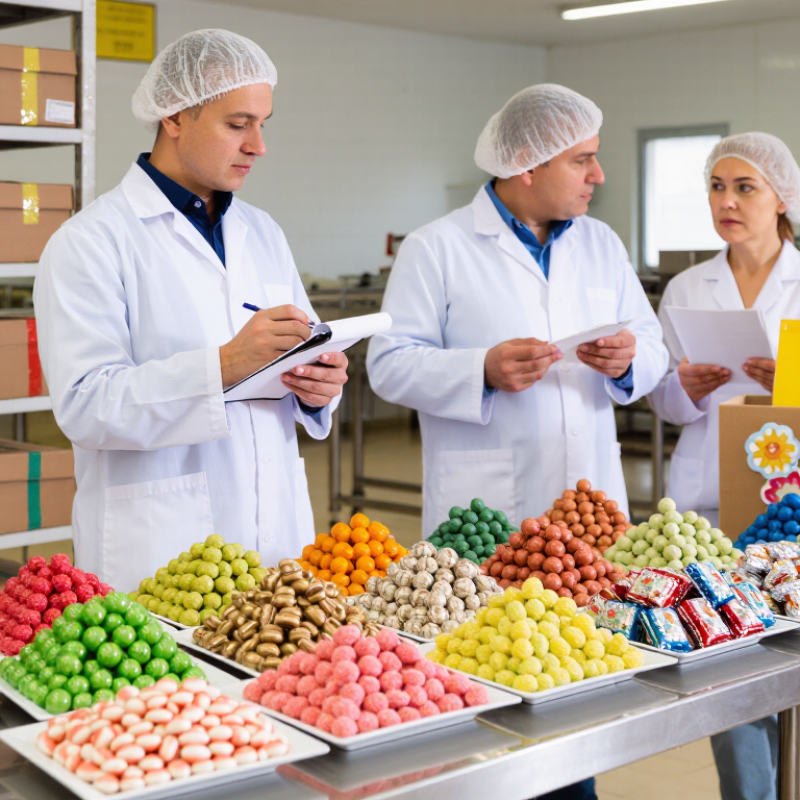
Request current HACCP records, ISO 22000 certification, and BRCGS audit results. Check the certification body, scope, site address, expiry date, and covered production lines. A certificate for biscuits may not cover gummy candy or filled sweets. Walk through the factory during a live production run. Look for separate raw-material storage, sealed ingredient bins, handwashing controls, and calibrated metal detectors. Ask how staff record cooking temperatures and allergen changeovers. Tiny gaps matter.
The ISO 22000 system should connect hazard analysis with traceability, corrective action, and supplier control. BRCGS audits usually examine food safety culture, sanitation, foreign-body prevention, and product testing. Request the latest nonconformity report, not just the score. Repeated findings may reveal weak management. WHO and FAO’s foodborne disease burden assessment shows why preventive controls deserve priority. Still, audits are snapshots. I have seen clean documents fail to explain one missing pallet label. That is uncomfortable, but useful. Verify one batch from ingredient receipt to finished-carton dispatch, and test whether the factory can complete the trail quickly.
| Audit Dimension | HACCP | ISO 22000:2018 | BRCGS Food Safety Issue 9 | Factory Evidence to Request | Wholesale Decision Rule |
|---|---|---|---|---|---|
| Food-safety system scope | Covers biological, chemical, and physical hazards from raw materials through distribution. | Requires a documented food-safety management system covering the organization’s relevant processes and products. | Covers site standards, product controls, process controls, personnel, and management commitment. | Current scope statement, product list, process-flow diagrams, and site layout. | Reject any site whose certificate or HACCP plan does not cover the candy products being purchased. |
| Hazard analysis | Identifies significant hazards and establishes preventive controls based on the seven HACCP principles. | Combines prerequisite programmes, hazard analysis, operational controls, and continual improvement. | Requires documented hazard and risk assessment with controls verified and reviewed. | Signed hazard analysis covering sugar, glucose syrup, dairy, nuts, allergens, additives, packaging, and foreign materials. | Require documented control measures for every identified high-risk hazard before approval. |
| Critical control points | Defines CCPs, critical limits, monitoring, corrective action, verification, and records. | Requires control of significant hazards through CCPs and/or operational prerequisite programmes. | Requires documented process controls, including validated limits where food safety depends on them. | Recent cooking or boiling records, thermometer calibration, metal-detector checks, and corrective-action logs. | Do not approve unresolved critical-limit deviations or missing monitoring records. |
| Allergen management | Allergens must be included in hazard analysis and controlled to prevent unintended presence. | Requires risk-based controls, communication, traceability, and verification within the food-safety system. | Requires documented allergen controls, cleaning validation or verification, labelling review, and staff training. | Allergen matrix, line-clearance records, cleaning checks, label approval, and supplier allergen declarations. | Require a documented cross-contact control plan for milk, peanuts, tree nuts, sesame, soy, and wheat where applicable. |
| Raw-material control | Incoming materials must be assessed as part of the hazard-control plan. | Requires control of externally provided processes, products, and services. | Requires supplier approval, risk assessment, specifications, monitoring, and performance review. | Approved-supplier list, ingredient specifications, certificates of analysis, and incoming inspection records. | Approve only suppliers with traceable specifications and documented controls for allergens, microbiology, and contaminants. |
| Microbiological safety | Microbiological hazards must be assessed and controlled using validated measures. | Requires verification and validation of controls relevant to food-safety hazards. | Requires risk-based environmental monitoring and product testing where appropriate. | Laboratory reports for relevant products, environmental swab plan, water test results, and sanitation records. | Require testing plans based on product risk; never rely on a single historical test report. |
| Foreign-body control | Physical hazards must be identified and controlled at appropriate process steps. | Requires operational controls and verification for significant physical hazards. | Includes documented glass, brittle-plastic, metal, sieve, filter, and detection controls where applicable. | Foreign-body register, metal-detector challenge tests, sieve records, glass inspections, and breakage procedure. | Any failed detector check without documented product isolation is a major approval concern. |
| Traceability and recall | Requires traceability and a procedure for handling unsafe food. | Requires traceability through specified stages and documented emergency response. | Requires documented traceability, incident management, product withdrawal, and recall testing. | One-step-back/one-step-forward records, lot coding, mass-balance exercise, and mock-recall results. | Require a completed mock recall with documented timing, reconciliation, and corrective actions. |
| Sanitation and hygiene | Prerequisite programmes must control cleaning, hygiene, pests, and contamination risks. | Requires prerequisite programmes appropriate to the operating environment. | Requires documented cleaning schedules, hygiene standards, validation or verification, and pest management. | Master sanitation schedule, pre-operational inspection, ATP or swab results where used, and pest-control reports. | Require records covering production areas, utensils, contact surfaces, storage rooms, and loading zones. |
| Packaging and labelling | Packaging and label-related hazards must be included in the hazard analysis. | Requires controlled communication and documented product information relevant to food safety. | Requires packaging approval, label verification, product specifications, and print-control procedures. | Approved artwork, packaging specifications, migration declarations where required, and start-up label checks. | Match product name, ingredient list, allergen declaration, net quantity, lot code, date marking, and storage instructions to the destination market. |
| Storage and distribution | Storage and transport conditions must prevent contamination and deterioration. | Requires controlled processes and communication across the food chain. | Requires documented controls for storage, dispatch, transport, stock rotation, and product protection. | Warehouse inspection, temperature and humidity logs where relevant, FIFO or FEFO records, and container-loading checks. | Set product-specific limits for heat, humidity, odour, pests, pallet condition, and carton protection. |
| Certification verification | HACCP may be implemented as a standalone system or within a broader certified system, depending on buyer requirements. | Certification is issued by an accredited certification body after conformity assessment. | Certification is issued through approved certification bodies and includes graded audit results. | Certificate number, scope, site address, issue date, expiry date, certification body, and audit report. | Verify certificates directly through the issuing body or official certification directory; do not accept edited PDF files alone. |
| Corrective actions | Requires corrective action when monitoring shows a CCP is not under control. | Requires nonconformity control, root-cause analysis, correction, and effectiveness review. | Requires documented corrective and preventive actions with responsibilities and completion dates. | Open nonconformity register, root-cause analysis, evidence of closure, and effectiveness checks. | Allow production only after critical and major issues have been closed or formally risk-assessed. |
| Audit frequency and follow-up | Frequency should be risk-based and include verification of the HACCP system. | Requires internal audits and management review at planned intervals. | Certified sites undergo regular certification audits, with audit frequency and programme determined by the applicable scheme rules and performance. | Internal-audit schedule, management-review minutes, latest certification audit report, and follow-up evidence. | Re-audit high-risk suppliers at least annually and after major process, ownership, site, or product changes. |
| Data Category | Required Record | Acceptance Benchmark | Review Method | Risk Rating |
|---|---|---|---|---|
| Certification status | Valid HACCP documentation and, where required, valid ISO 22000 or BRCGS certification. | Scope covers the production site, relevant candy categories, and intended export activity. | Check certificate details with the issuing certification body. | Critical |
| Product specification | Formula, ingredient statement, allergen profile, packaging format, shelf life, and storage conditions. | Specification is approved, version-controlled, and consistent with the buyer’s destination-market requirements. | Compare specification, approved artwork, batch records, and finished-product samples. | High |
| Batch traceability | Ingredient lot records, production date, line identification, finished-goods code, and dispatch records. | Factory can trace one finished lot backward to ingredients and forward to delivery records. | Conduct a documented mock-recall and review mass-balance accuracy. | High |
| Laboratory verification | Recent product and environmental test results selected according to product and process risks. | Results are issued by a competent laboratory and match the tested product, lot, and specification. | Verify laboratory identity, test method, sample code, date, and result interpretation. | High |
| Factory capability | Production-line capacity, minimum order quantity, lead time, export packing capability, and contingency arrangements. | Capacity and lead time are supported by production planning records rather than sales estimates alone. | Review production schedules, equipment list, warehouse capacity, and recent shipment records with sensitive information removed. | Medium |
| Packaging integrity | Primary and secondary packaging specifications, seal checks, coding controls, and pallet configuration. | Packaging protects candy from moisture, heat, contamination, crushing, and coding errors during export distribution. | Inspect samples, packaging records, carton markings, and container-loading procedures. | Medium |
| Pre-shipment controls | Final inspection report, release authorization, lot photographs, quantity reconciliation, and container condition check. | Every export lot is released by an authorized person against the approved purchase specification. | Use a documented pre-shipment inspection and retain records for each lot. | Medium |
How to Source Shantou Candy for Global Wholesale?
When sourcing Gum Candy from Shantou, compliance should begin before price negotiation. For the United States, identify the FSVP importer clearly. The importer must assess the supplier, review hazard controls, and confirm that the food meets U.S. safety standards. Ask for facility details, ingredient specifications, allergen controls, laboratory results, and production records. A qualified individual should document the FSVP activities and keep accessible records. Do not treat a supplier questionnaire as complete verification. It rarely is.
For the European Union, Regulation 1169/2011 requires accurate and readable consumer information. Check the product name, ingredient list, emphasized allergens, net quantity, nutrition declaration, durability date, storage instructions, and responsible food business operator. The label should use the correct market language. Text must remain legible on small candy bags, not disappear near a sealed edge. Confirm whether origin information is required for the product. Packaging artwork needs a careful legal review before printing.
In practice, compare the approved specification with the actual carton. A flavor change can alter allergens or nutrition values. A missing batch code can weaken traceability. Keep signed label approvals, test reports, supplier evaluations, and corrective-action records. One imperfect area deserves reflection: documents may be current, while factory conditions change quietly. Recheck critical controls before every major shipment, especially after recipe, packaging, or production-line changes. Get independent regulatory advice when classification or responsibility remains uncertain.
For Shantou candy, request production samples before discussing global wholesale volumes. Test the actual recipe, not a substitute batch. Record texture, color, odor, and weight on day one. Then inspect them weekly under controlled conditions. A practical design uses 25°C and 60% relative humidity for normal storage. Add a hotter, wetter condition for stress testing. This exposes syrup migration, stickiness, whitening, and flavor loss. Shelf life is not only a printed date.
Microbiology testing should match the candy’s ingredients and moisture level. Ask an accredited laboratory to test aerobic plate count, yeast, mold, and relevant pathogens. Low-moisture candy is safer, but not risk-free. The World Health Organization’s global burden report estimates 600 million foodborne illnesses and 420,000 deaths each year. That figure supports disciplined verification, especially when products cross climates and distribution systems. Use documented sampling plans, batch codes, and chain-of-custody records. A spreadsheet is helpful, though it can still hide poor sampling.
Packaging performance deserves equal attention. Measure seal strength, leakage, water-vapor transmission, and oxygen exposure where relevant. Simulate carton stacking, vibration, and drops using recognized ASTM distribution-testing methods. Check wrappers after heat exposure. Check cartons after compression. Small pinholes may appear only after transport. Packaging should also protect against humidity, crushing, and odor transfer. Ask suppliers for material specifications and food-contact declarations. My own caution: accelerated tests can predict problems, but they cannot perfectly reproduce a six-month ocean journey. Repeat the test when the formula, film, carton, or sealing temperature changes.
I calculate landed costs before approving any Shantou candy quotation. My worksheet lists product price, inner packaging, export trucking, ocean freight, insurance, destination charges, duty, import VAT, and broker fees. Incoterms 2020 allocate transport responsibilities, but they do not guarantee the final tax amount. Under FCA, the buyer usually controls the main freight. Under DDP, the seller manages delivery and import clearance, yet local rules may limit this arrangement.
For a Candy Toy, classification deserves extra care. HS 1704 generally covers sugar confectionery without cocoa, but mixed products may require separate review. I ask for ingredient lists, net weights, carton dimensions, photographs, and a commercial invoice before confirming the code. The destination tariff database should verify the duty rate. A customs broker can also check valuation rules, especially when freight and insurance enter the customs value.
Here is a practical estimate. Assume 10,000 units at $0.80, packaging at $0.05, and export trucking at $0.03 per unit. Add $1,200 freight, $80 insurance, and $450 destination fees. If the customs value is $9,550 and duty is 12%, duty equals $1,146. Import VAT, brokerage, inspection, and storage remain separate. My early estimates were sometimes too optimistic. Port delays and carton relabeling changed the result. I now keep a 5% to 10% contingency and request written confirmation from the broker.
Request current HACCP records, ISO 22000 certification, and BRCGS audit results. Check the certification body, site address, expiry date, scope, and covered production lines. Paperwork can look complete. Verify it carefully.
A product sample shows one moment, not daily production controls. A factory visit can reveal poor handwashing, open ingredient bins, or weak storage separation. Tiny gaps matter.
Watch a real production run, if possible. Check sealed ingredient containers, separate raw-material storage, handwashing stations, calibrated metal detectors, and clean work areas. Do not rely only on staged conditions.
Select one batch and trace it from ingredient receipt to finished-carton dispatch. Check pallet labels, batch codes, production records, and shipping documents. The factory should complete this trail quickly. If not, pause.
Request the latest nonconformity report, not only the audit score. Repeated findings may show weak management or unfinished corrective action. One missing pallet label can expose a larger control problem.
Identify the responsible importer clearly. Collect facility details, ingredient specifications, allergen controls, laboratory results, and production records. A supplier questionnaire alone is rarely enough. It is only a start.
Review the product name, ingredients, emphasized allergens, net quantity, nutrition declaration, durability date, storage instructions, and responsible operator. Use the correct market language. Keep text readable on small candy bags.
Recheck critical controls before every major shipment. Review them after recipe, packaging, supplier, or production-line changes. A flavor change may alter allergens or nutrition values. Current documents can hide quiet changes.
Sourcing Shantou Candy for global wholesale requires a structured, evidence-based process. Begin by identifying qualified suppliers through HS 1704 trade data, then define clear product specifications covering ingredients, allergens, labeling, packaging, and quality requirements under Codex CXS 1-1985 and GB 7718-2011. Compare suppliers by minimum order quantity, production capacity, and lead times, using available customs and shipment information to support realistic purchasing decisions.
Before placing an order, audit factories against recognized food-safety systems such as HACCP, ISO 22000, and BRCGS. Confirm that documentation supports destination-market requirements, including FDA FSVP obligations and EU Regulation 1169/2011. Test samples for shelf life, microbiological safety, taste consistency, and packaging durability. Finally, calculate the complete landed cost by considering product pricing, freight, insurance, Incoterms 2020 responsibilities, customs procedures, and applicable HS 1704 duties. This approach helps wholesalers reduce risk, improve cost visibility, and build reliable international supply relationships.